
Rap brings rhythm, story, and energy together. The right lyrics have impact, set a mood, and stick with listeners. An artist with a nice flow and sharp lyrics can take a song to a completely different level.
The beat plays a huge role too—it sets the mood and determines the flow. Without the right beats and skill-building practices, even the best lyrics can feel flat and boring. But where do you start with writing rap song lyrics? How do you know you’ve found the perfect beat to accompany your bars?
Whether you're just starting out in the game or looking to hone your writing skills, these tips will help you establish a strong foundation and advance your songwriting to the next level.
A 6-Step Creative Process to Writing Rap Lyrics
Jumping into verses without a plan can make songwriting feel scattered. Having a solid foundation makes the process of writing rap lyrics run smoothly.

Step #1 – Select a Theme or Story
Every good rap song has a concept. Some artists flex their success, some tell personal stories, and some are just straight-up hype anthems.
Ask yourself the following before you put pen to paper.
- What's the message?
- What type of atmosphere suits the subject?
- Who's the audience?
Step #2 – Make a Word Bank
Freestyling is great, but expanding your vocabulary makes lyrics intriguing. List words that are part of your theme. If the song is about waking up, words like “grind,” “paper,” “hustle,” “struggle,” and “win” pop in your lyrics. Organize bars by jotting down rhyme pairs or wordplay ideas beforehand.
Step #3 – Play with Rhymes and Wordplay
Rap sounds different when the rhymes go beyond the basics. Alternating different rhyme schemes makes lyrics sound more natural and interesting.
- End rhyme – “I'm on the grind, never waste my time.”
- Internal rhyme – “Haters keep hatin’, but I keep creatin’.”
- Multi-syllable rhyme – “Elevation, dedication, no hesitation.”
Add metaphors, punchlines, and double meanings to give the lyrics depth.
Step #4 – Write With Flow in Mind
Lyrics not only should read well—they should also flow when rapped. Words have to conform to the rhythm of the beat, making room for natural pauses and shifts in tempo. Reading aloud while writing keeps things flowing along and stops disruptions in the creative process.
Understanding The Structure of a Rap Song
Lyrical skill is essential, but form makes a song strike the right chord with fans.
Introduction
The first few seconds set the mood. Some rappers start with an ad-lib or a preview of the hook.
Verse (16 Bars)
The verse holds the main message. Most rap verses are 16 bars long, but there are songs that are shorter or longer. Mastering this element requires powerful wordplay, narrative, or punchlines to maintain the listeners' interest.
Hook/Chorus (8 Bars)
The hook is the part that sticks in people's heads. This can be anything from a catchphrase, to a melody, to a chant-like repeating line. It’s simple to recall and makes the song memorable.
Verse 2 (16 Bars)
The second verse keeps the energy going. This can be an expansion of the first verse, a unique perspective, or an altered flow for track diversity.
Bridge (Optional)
Some songs include a short break from the usual pattern. This can be a new melody or an instrumental switch-up.
Conclusion
The conclusion can fade out with the rhythm, reuse a hook, or leave the audience with a final lingering line.
SOUNDRAW – The AI-Powered Production Studio in Your Pocket

If you’re an indie artist coming up in the rap scene, you know how hard it is to break through and make it. If we look at what’s holding you back, it’s probably the high costs of renting studio time, buying equipment, and spending money on licensing fees and royalties for your work.
SOUNDRAW takes care of all of those barriers to entry, giving you a complete studio toolkit to launch your career as a writer/producer.
Intuitive UX and Easy Production
SOUNDRAW is so easy to use that you can master it on your first try. It features a click-based prompting interface that’s easy to navigate and customize. There’s no other platform offering such a user-friendly experience, and amazing results.
When you arrive on the site, click the “Create Music” button the get started. Select the prompts from the main page and move your project into the creator studio for preview and post-production.
Simple Click-Based Prompting and Editing
The post-production suite on SOUNDRAW makes you feel like you’re the next Dr. Dre. SOUNDRAW generates six different tracks for you to preview. Use the click prompting to add or remove genres from your tracks and set the mood, add instruments, or change the tempo, or the length of the track.
It’s so easy to use, and if you don’t like any of the base tracks the platform gives you, just hit the “Generate More Music” button and you’ll get more original tracks to preview.
AI-Powered Post-Production
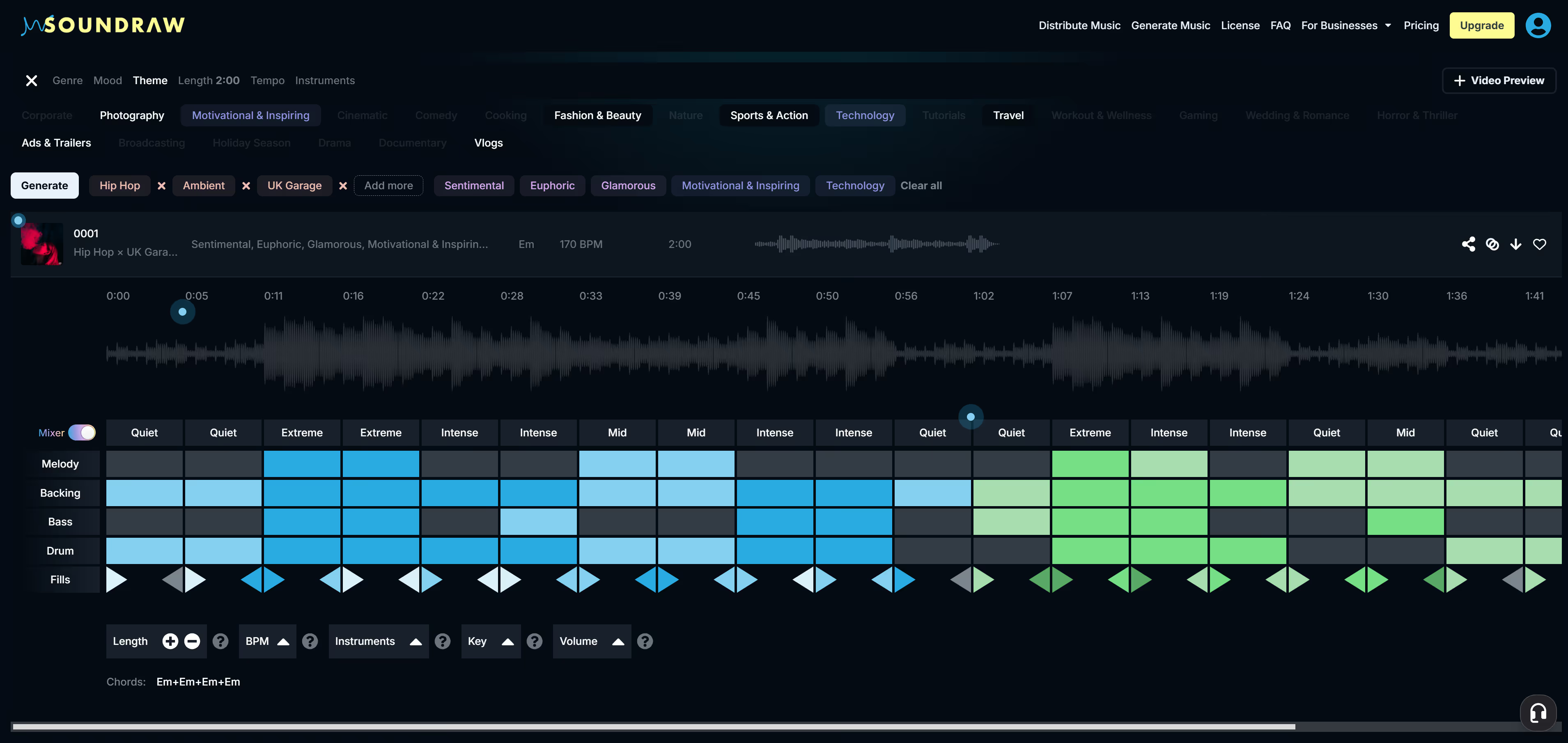
The “Mixer” tool is where SOUNDRAW shines. You get click-based prompting over the five track elements—melody, backing, drum, bass, and fill—play around with them and change the volume levels of the elements independently, switch up the key of the track and change each component to complete customize your beats for your writing purposes.
5 Tips for Using SOUNDRAW to Create Beats That Inspire Lyrics
A great beat can bring out the best in your lyrics. SOUNDRAW lets you create your beats with different tempos and moods, so you’re guaranteed to find something that fits your style. Here are our top five tips for experimenting with the platform.
Tip #1 – Choose the Right Tempo
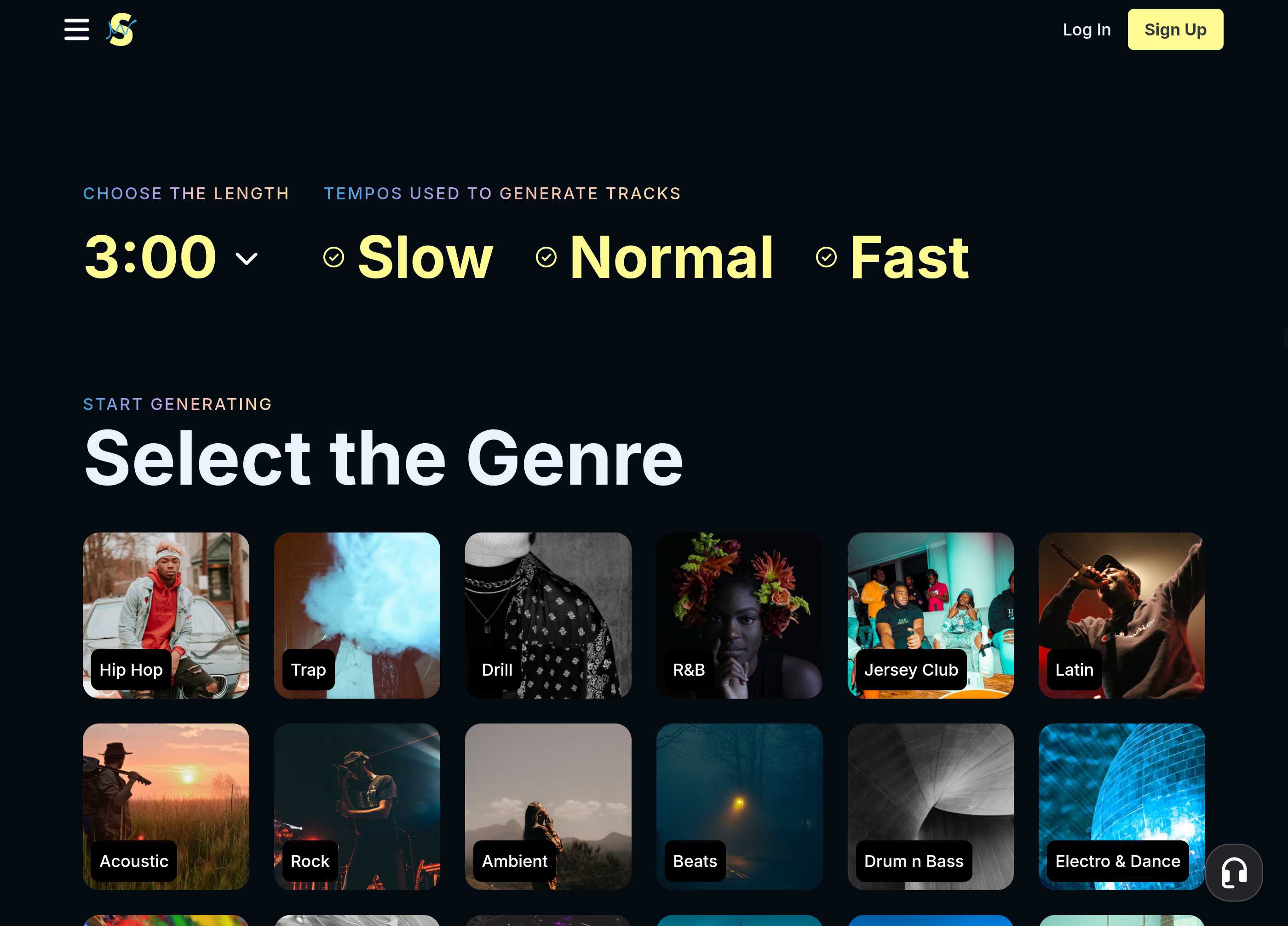
Faster beats are for hype songs, while slower beats leave more room for storytelling. SOUNDRAW enables you to adjust tempo, so experiment to get the right speed.
Tip #2 – Choose the Right Mood
SOUNDRAW offers different moods like dark, energetic, chill, or aggressive. Selecting a beat that goes with the song's theme helps to set the tone of the lyrics.
Tip #3 – Experiment with Different Sounds
Changing up instruments or drum beats can bring fresh inspiration. Try tweaking the elements of the beat until something clicks.
Tip #4 – Write to the Beat
After the beat sounds good, freestyle or mumble over it to get a natural flow of the track before you settle on lyrics.
Tip #5 – Decide How Far You Want to Go
SOUNDRAW gives you two options when subscribing to its platform. You can get unlimited downloads of AI beats and full use of all the editing tools. If you want even more from SOUNDRAW, sign up for the Artist packages. This subscription lets you upload your vocals and instrumentals to your SOUNDRAW tracks, giving you even more depth of creativity on the platform. It’s up to you how far you want to immerse your creative experience in AI technology.
Examples of Successful Rap Songs
Looking at how top rappers structure their songs can help with your own writing. All these songs have a clear structure and reflect the style and theme associated with the artist's specific genre in the rap community.
Eminem – “Lose Yourself”
Compelling storytelling from start to finish. Verses generate tension and energy. The hook repeats with a catchy message.
Drake – “God’s Plan”
Catchy and simple hook. Mellow flow with reflective lyrics. Easy-to-follow format that keeps the listeners engaged.
Kendrick Lamar – “Humble”
Hard-hitting beats accompany the aggressive flow. Punchy lines with layered meanings. Verses switch up flows to make it dynamic.
Subscribe to SOUNDRAW and Start Producing
Good rap lyrics are a product of practice, creativity, and the right beat. By having a strong foundation, experimenting with different flows, and using apps like SOUNDRAW to find the perfect instrumental, writing a rap song is a piece of cake.
So, subscribe to SOUNDRAW and get a mobile production studio for your pocket. Take your writing to the next level and position yourself to experience that breakthrough success you crave so badly.
