
.png)
AI music tools are shaping the future of music creation, production, and marketing. Professionals and indie artists alike are embracing AI-generated music in their content, and today's generators can produce almost anything, from metal breakdowns to hip-hop symphonies.
Whatever you can describe in a prompt, an AI music generator can help you create. And "AI music tools" covers a lot more than generators alone: the category spans songwriting assistants, beat and composition engines, mixing and mastering software, vocal/stem isolation tools, and even the marketing tech that helps a finished track find an audience.
Berklee advises musicians to educate themselves on AI and how to use it. Knowledge is power, and that starts with knowing what's actually out there, organized by where it fits in your workflow.
What are the best AI music tools of 2026?
Here's a look at the top AI music tools of 2026, grouped by stage: ideation, composition and production, post-production, and marketing.
1. AI Tools for Ideation & songwriting
ChatGPT
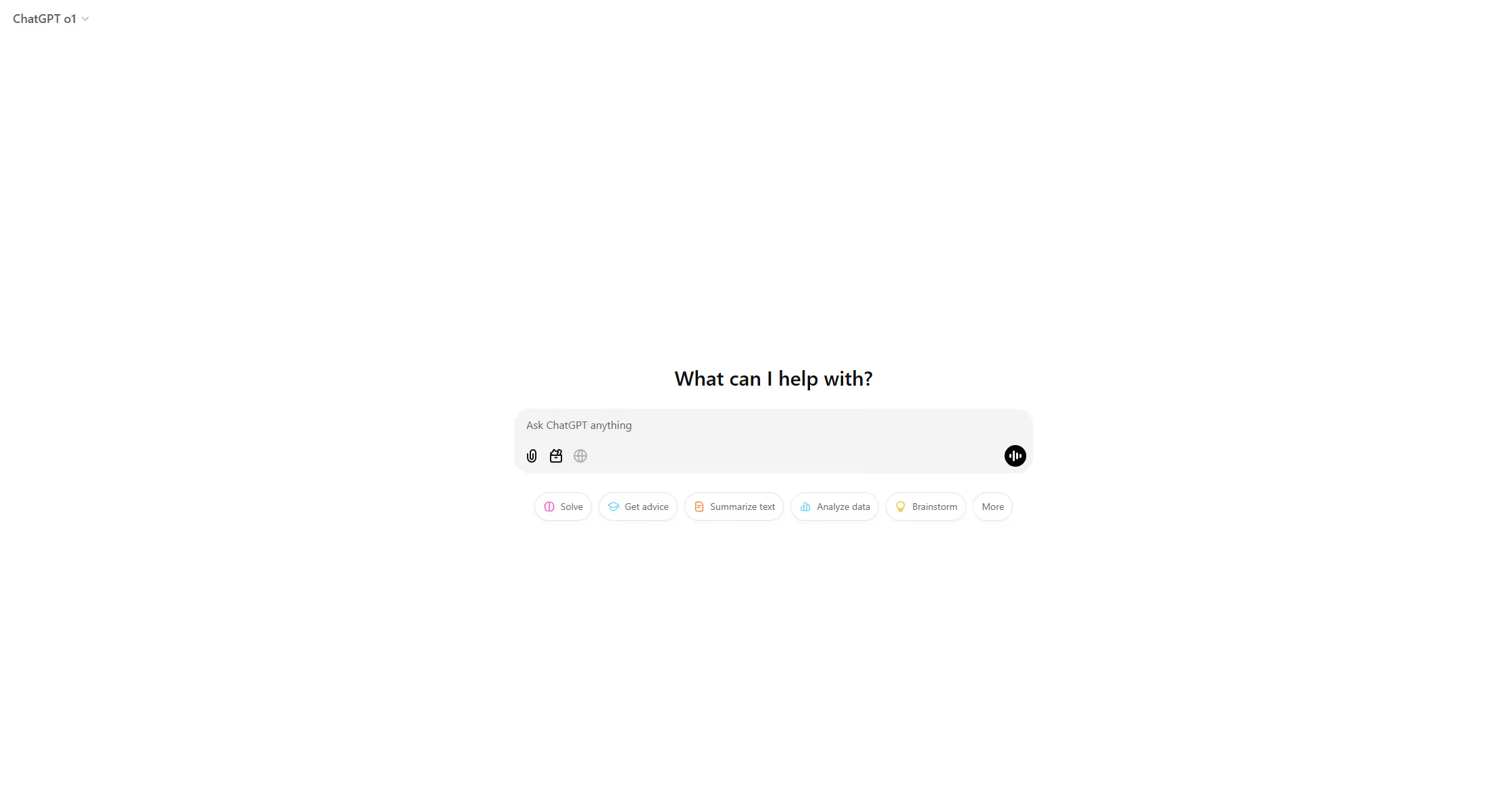
ChatGPT might be one of the most famous writing-focused AI generators. However, it’s not just useful for doing research and writing recipes. ChatGPT has also been used to write songs, or to help users brainstorm ideas during the songwriting process.
ChatGPT creates output based on user prompts, which can be asked to write about anything from mid-1990s economics to country songs about climate change in the style of Bob Dylan.
It can become one of the most widely used tools for music research and songwriting.
LyricLab
LyricLab is a musician-focused lyric generator that goes beyond plain text: it can suggest chords and rough audio alongside lyrics, with controls for mood, genre, and harmonic context. It's a step up from general-purpose chatbots for writers who want suggestions that already think in musical terms, rather than just poetic ones.
2. Composition, beat-making & full-song generation
This is the category most people mean when they say "AI music generator": tools that turn a prompt into an actual beat, instrumental, or full track.
SOUNDRAW and SOUNDRAW Grid
.png)
SOUNDRAW remains one of the top AI music tools of 2026 for professionals and indie creators who need production-ready output, not just a demo. It's built specifically for custom beats and instrumental music, with an intuitive interface and a wide range of genres and styles, giving creators real control over structure rather than a one-shot, take-it-or-leave-it generation.
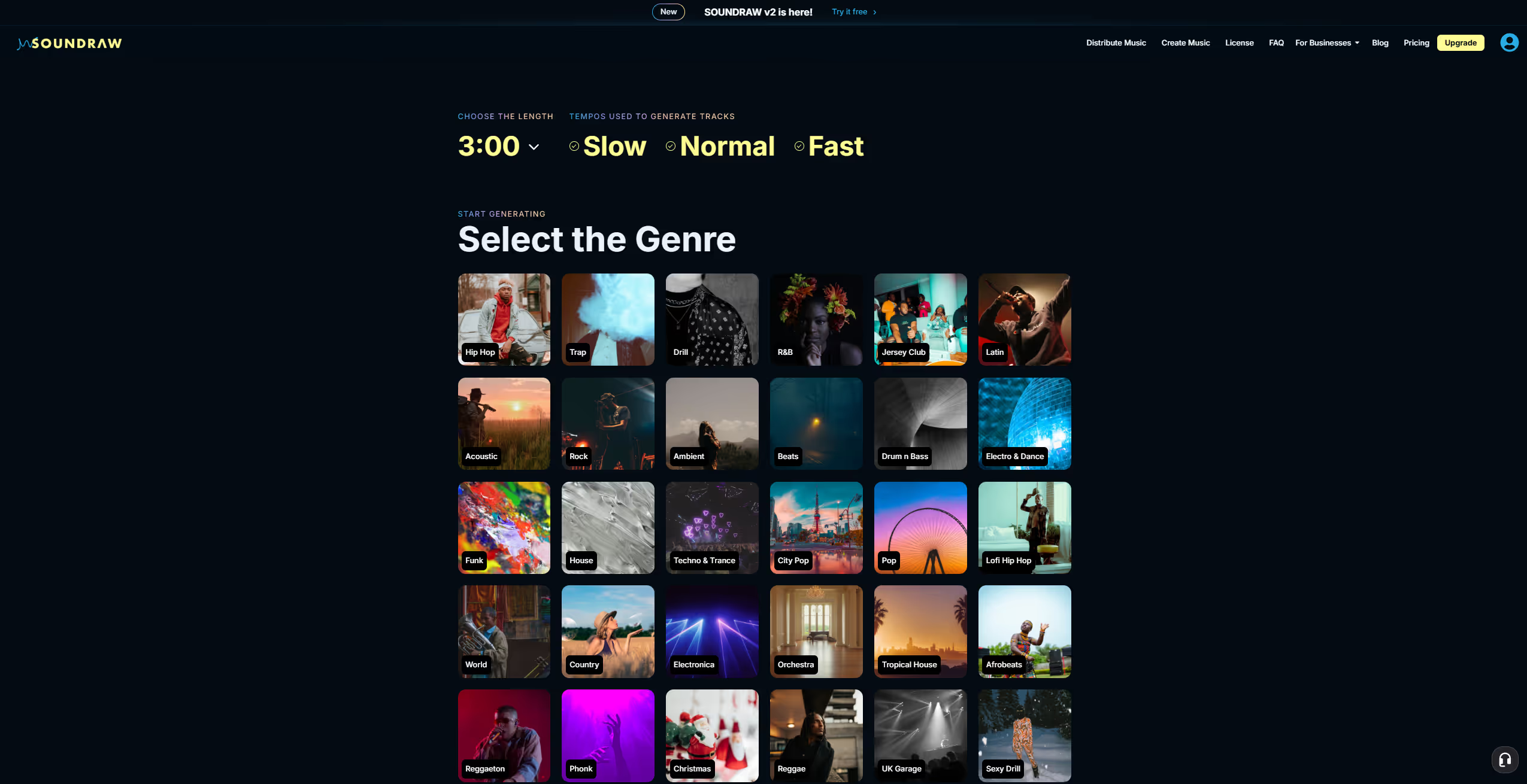
Every track SOUNDRAW generates is royalty-free, so creators and producers can build on their output without licensing headaches. That's a meaningful difference from many general-purpose generators, where commercial usage rights are murkier. SOUNDRAW is a paid tool, but the trade-off is consistency: where free AI song generators often produce choppy or inconsistent results, SOUNDRAW delivers polished, royalty-free music and beats every time.
Suno
Suno has become one of the most capable full-song generators on the market, producing studio-quality audio with natural-sounding vocals from a text prompt. Its Suno Studio environment adds stem editing, MIDI export, and audio upload, and tracks can run up to eight minutes with a "weirdness" slider for pushing into more experimental territory. It's a strong option for artists who want AI to generate vocals and full arrangements, not just instrumentals. On the downside, the site has repeatedly found itself in music copyright lawsuits regarding their training data
Audiomodern Playbeat

Audiomodern Playbeat is an AI-assisted beat generator. Instead of generating whole songs from prompts, this particular AI can be focused to create specific elements of a song, this could be a great way for drummers and producers to get themselves out of feeling blocked and back into some creativity.
Producers and creatives often start out with a beat which everything else builds around. Audiomodern Playbeat is useful for anyone who wants to find out just what AI can do for the first time.
Unfortunately, it doesn’t exist as a standalone, but has to be downloaded from Playbeat’s website.
Udio
Udio focuses on fast experimentation, natural-language prompts, multi-genre support, and audio-to-audio remixing at up to 48kHz. It leans toward quick discovery and social sharing rather than professional delivery, and as of 2026 tracks are harder to export and use outside Udio's own ecosystem, which is worth knowing if you need portable, licensable output.
MuseNet
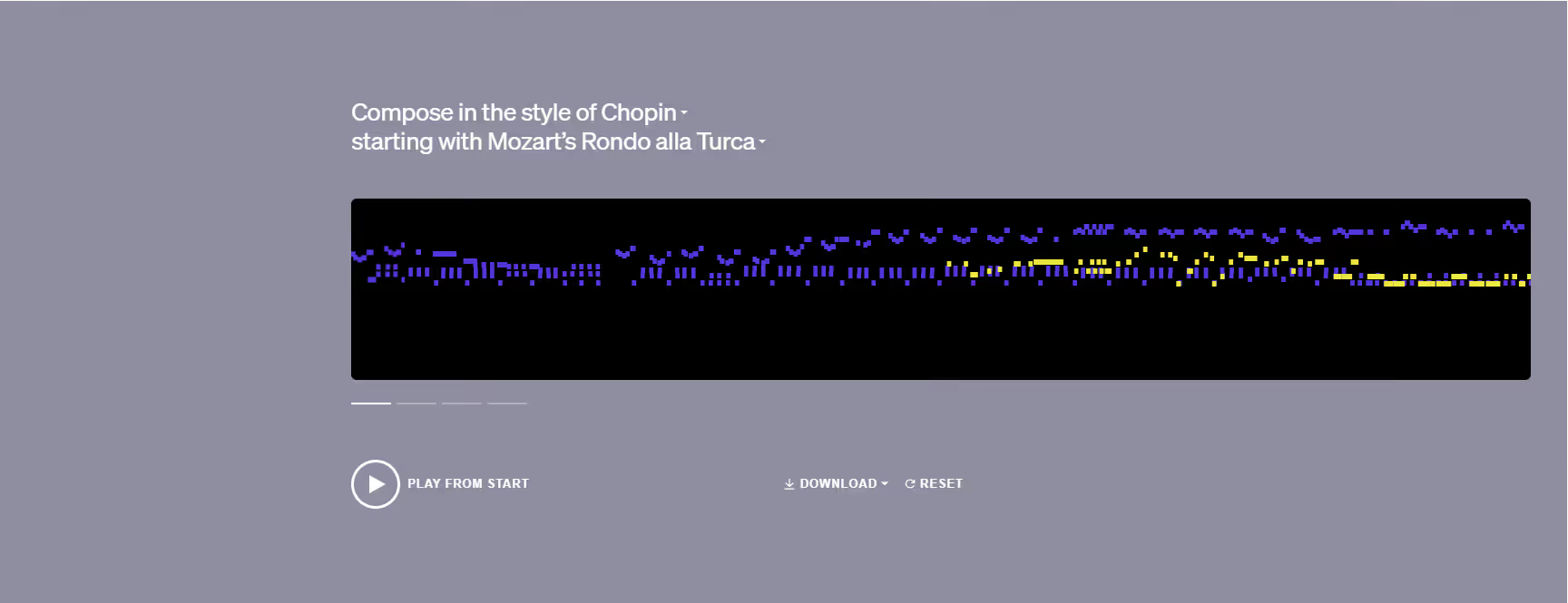
MuseNet has been around since 2019 as an OpenAI project, making it one of the earliest music generators on the internet to fully rely on machine learning for its output.
This original project allows users to generate 4-minute compositions with 10 instruments and while this might seem very basic compared to software like SOUNDRAW today, this was pretty huge news back in the day.
MuseNet is still fun for discovering AI music generating tools. In 2026, you’ll still want to see what it can do to generate unique instrumental music.
3. Mixing & mastering
Once a track exists, it needs to be balanced and finished, historically one of the most technical, time-consuming parts of production.
LANDR
LANDR is one of the most established names in AI mastering, combining mastering with distribution and sample libraries in one platform. It's a solid default for creators who don't have the time or training to master their own work. That includes podcasters and video editors, not just musicians, since mismatched volume and quality are a problem in any medium.
RoEx Automix
.png)
RoEx Automix handles multitrack AI mixing and mastering, accepting individual stems rather than only a finished stereo file. That places it earlier in the process than most mastering tools, closer to where mix decisions actually get made. You upload your stems, choose the style and loudness target, and get back a balanced mix with a mastered output. The Fine-Tune panel lets you adjust the balance afterwards rather than accepting a single fixed result. RoEx also runs Mix Check Studio, a free analysis tool for diagnosing problems in a mix before you commit to it.
eMastered
eMastered is a stereo mastering tool built by Grammy-winning engineers, and it stands out for offering manual adjustment controls over compression, EQ, and stereo width. That is very useful for users who want AI-assisted mastering but don't want to give up all control over the result.
4. Post-production: vocal & stem isolation
Isolating vocals or individual instruments used to take producers hours of manual work. AI has turned it into a near-instant process.
Audionamix
Audionamix turns vocal and instrument isolation into an AI-powered process with clean separation and no bleed-through — useful for mastering, remastering, or pulling samples and backing tracks out of an existing recording.
LALAL.ai
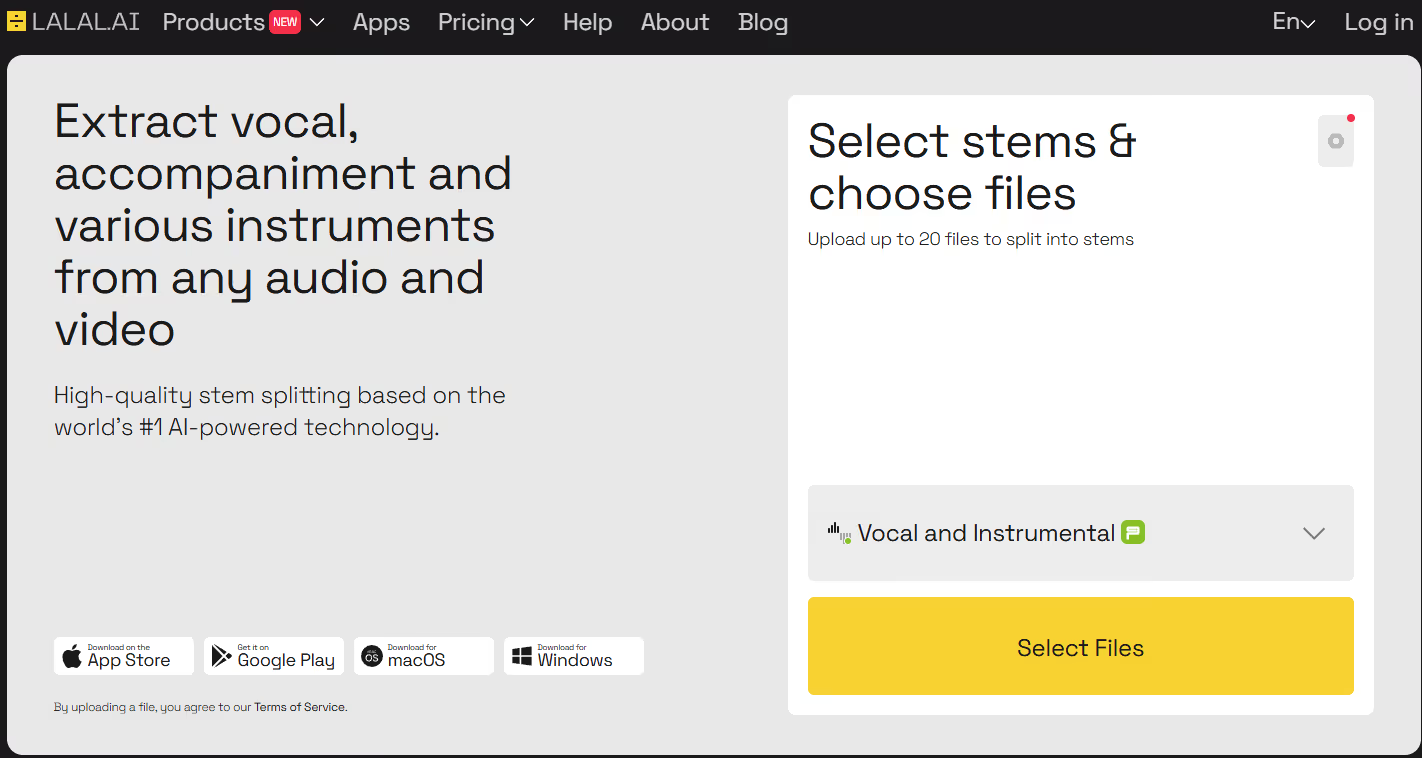
Lalal.ai is similar to Audionamix, and designed to use AI and machine learning to isolate specific parts from sound recordings. If you’re looking to create a backing track with only the original bass parts, for example, just feed the recording into the system.
AI tools like Lalal.ai and Audionamix scans for different patterns on the recording, and knows what parts to remove. Automatic noise correction and balancing is what makes AI-powered tools like this particularly useful for producers and sound engineers.
Lala.ai is great for having fun, but also great for players who want to practice their skills without being distracted by anything else on the track.
Ultimate Vocal Remover (UVR5)
UVR5 is a free, open-source desktop app built on the Demucs architecture, popular with producers who want full control over separation algorithms, including an ensemble mode that runs multiple algorithms at once for cleaner results. It's less polished than paid web tools, but it's a favorite among users who want to fine-tune the separation process itself.
5. Marketing & promotion
Neural.Love
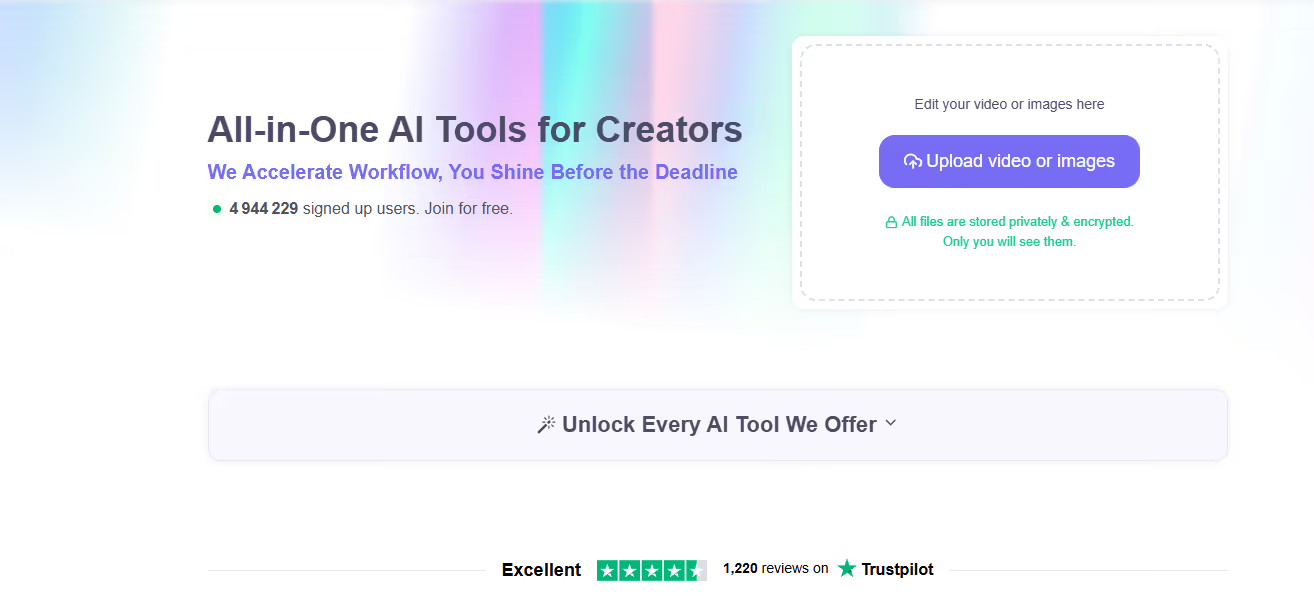
Neural.love is a generative AI model that’s designed to create videos and other imagery from the user’s prompts. This is useful because it can help you to create accompanying promotional images or background videos for content, including live performances, where you truly want to see something unique on stage.
Chartmetric
Chartmetric applies machine learning to streaming and social data to help artists and their teams spot trends early, which markets are heating up, which platforms are driving growth, and where to focus promotional effort. It's less a creative tool and more a decision-support one, but in a crowded release calendar, that's often just as valuable.
AI Music Tools in 2026
AI continues to reshape the music industry end to end, not just how tracks get made, but how they get finished and found. From full-song generators to stem-splitting software to the analytics tools guiding release strategy, these categories are giving both professionals and aspiring artists more control at every stage. Platforms like SOUNDRAW sit right at the center of that shift, pairing high-quality, royalty-free composition with real creative control.
Whether you're brainstorming a lyric, generating a beat, mastering a mix, or planning a release, there's now a dedicated AI tool for that stage of the process. Explore what fits your workflow, and see how these technologies can shape your next project.
